That’s Not My Neighbor1.0.0
Description
Entering the World of That’s Not My Neighbor APK: A Landmark Psychological Horror Indie Game
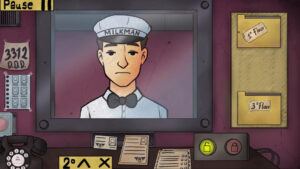
That’s Not My Neighbor APK is a psychological horror indie game that places players in the tense role of a doorman confronting doppelganger threats in a 1955 apartment building. This unique horror game, originally released on itch.io, has swiftly captivated fans of psychological horror and indie games alike. Instead of relying on jump scares or elaborate monsters, That’s Not My Neighbor exploits the everyday blending the tension of retro bureaucracy with the constant paranoia of being infiltrated by doppelgangers. Right when I started playing, I laughed at the thought of paperwork a perfect job simulation making me sweat more than ghosts ever did.
Straightforward mechanics meet unnerving atmosphere. Your primary weapon is not a shotgun or a magic spell, but sharp observation and split-second judgment. If you’ve ever worried about letting the wrong person into your building, or blanked on whether your neighbor always had blue eyes, this horror game might strike a chord (or three). “That’s Not My Neighbor” delivers suspense with every knock, demanding precision, strong identity verification, and intuition from its players.
Psychological Horror Meets 1955 Apartment Building in That’s Not My Neighbor
Psychological Horror Foundation
“That’s Not My Neighbor” wraps players in subtle but suffocating psychological horror. Unlike many traditional titles, this indie game achieves fear through observation and self-doubt. The experience is based on two ideas:
- Identity can be forged.
- Trust is fragile.
The player steps into the shoes of a lone security guard, faced with disturbing situations where every decision may open the door to danger. There’s no need for clumsy chase scenes or gore. Instead, threat emerges from nuance uneven smiles, mismatched documents, minor inconsistencies that only someone with careful document inspection skills will catch. The horror lives in the gap between what seems normal and what feels slightly off.
Most of my anxiety during the game didn’t come from what jumped out at me but from what was hidden in the little details. The experience is a slow burn one that makes you scrutinize each pixel, each line of text, and every nervous twitch a character displays. There is a constant EVA relationship at play: (Doorman) – must judge – (Resident’s identity), (Resident) – may be – (Safe or Deadly).
Retro Environment and Atmosphere
The game’s world sits firmly in the 1955 apartment building setting. By using a post-war, mid-century backdrop, the developer transforms an everyday situation into a stage for tension. The hallways are dim, typewriters clack in the background, and even the wallpaper seems to whisper secrets. There’s an oppressive air a weight that never leaves you even soon after you turn off the game.
Tables show the visual and thematic impact:
| Aspect | 1955 Setting Effects | Gameplay Result |
| Technology | No digital tools | Reliance on paper, vision |
| Lighting | Dim, flickering light | Heightened suspense |
| Architecture | Boxy, labyrinthine layout | Harder to see, more tense |
- Old-fashioned design creates a sense of isolation.
- Evocative sound design like echoing footsteps heightens the fear.
- Retro bureaucracy makes every small error feel catastrophic.
The retro styling, tied directly to its 1955 setting, reinforces one idea: you are alone, working with limited means and unlimited paranoia inside the apartment building.
The Doorman’s Burden: Security Guard Duties and Doppelganger Threats
Duties as the Doorman
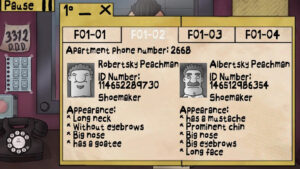
Your job is deceptively simple in this job simulation-meets-psychological horror scenario. You check documents and let the right people in. (Doorman) – checks – (Residents’ credentials). As the days pass, you realize the magnitude of your task. It isn’t just pushing paper; it’s about keeping evil at bay using document inspection and identity verification skills.
- Collect ID cards from residents at the entrance.
- Cross-reference ID with official registries.
- Observe physical features for authenticity or oddness. ~ Approve or deny entry based on findings.
The job’s pressure never lets up. Mistakes have real consequences allowing a doppelganger costs more than a slap on the wrist. It’s a narrative-driven indie game where bureaucracy has never felt more like a battle for survival.
Identifying Threats
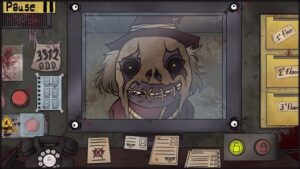
The ever-present threat comes in the form of doppelgangers inhuman entities that mimic residents, forge their documents, and try to slip through by copying human behavior. As the security guard, it’s your duty to spot the imposters and keep the apartment building safe.
- Doppelgangers can flawlessly imitate faces.
- Forgeries test your attention to detail.
- Some threats will copy mannerisms or speech. ~ Minor inconsistencies lead to high-stakes choices.
In my playthrough, spotting these subtle cues felt equal parts detective work and nerve-shredding gamble. Each resident could spell doom. You learn to trust, then unlearn, then second-guess everything. The SVO is clear: (Doppelganger) – attempts to enter – (Apartment Building).
Identity Verification and Document Inspection: Suspenseful Mechanics in This Horror Game
Observation and Verification
At its core, this indie game is about sharp observation and careful identity verification no puzzle-solving, no monster fights, just pure scrutiny and judgment. The mechanics demand both logic and intuition:
- You check ID photos and information against the actual resident.
- You inspect for telltale irregularities: mismatched ear shapes, inconsistent signatures, slight changes in eye color.
- The apartment building’s records must align flawlessly with what the person claims.
Wrongful entry can ruin your streak and the safety of others there is no forgiving checkpoint for missed subtleties. Sometimes, I caught myself sweating as I stared too deeply at a pixel nose. Missing a small discrepancy isn’t just a mistake; it’s a potential disaster.
Consequences and Moral Dilemmas
“That’s Not My Neighbor” thrives on moral weight. Approving or denying entry becomes a loaded decision. Maybe the person at the door is who they claim to be or maybe they’re not.
- Letting in a doppelganger may doom the whole building.
- Refusing real residents can mean condemning innocents.
- Hesitation leads to more pressure, anxiety, and risk.
Every decision every “yes” or “no” falls heavy. The game’s mechanics encourage you to weigh the cost of trust. The simplest paperwork becomes an existential crisis. At times, I felt outright guilty for a snap judgment, knowing it may not be the right one.
Moral EVAs occur everywhere: (Guard) – protects – (Tenants). (Guard) – fails – (Building is at risk).
Bureaucracy and Visual Atmosphere in Nacho Sama’s Psychological Horror Experience
Atmosphere and Visual Style
The game’s artistic design supports its psychological horror core. Muted colors, strong contrast, and minimal lighting frame every scene. Small details such as a flickering light bulb or a newspaper headline contribute to the mood. These visuals, along with a minimalist soundscape, feed unease directly to the player.
Table of main stylistic choices:
| Visual Feature | Impact on Mood |
| Muted palette | Emphasizes bleakness |
| Shadowy backgrounds | Suggest hidden threats |
| Limited animations | Increases focus on character details |
- Sparse visual effects keep your eyes on the essentials.
- Realistic paper textures reinforce authenticity.
- Facial expressions convey just enough to keep you guessing.
The art and sound elevate the tension, making every moment in this narrative-driven experience draped in suspicion.
Underlying Metaphors
Beneath the horror, the game acts as metaphor. Doppelganger infiltration stands for the deeper themes of deception, trust, and the breakdown of personal safety.
- Fear of deception mirrors modern anxieties about identity theft.
- Loss of trust between people and institutions echoes through every denied entry.
- Bureaucratic horror paperwork as a tool of both protection and potential failure.
As you play, the game’s commentary on how easily threats can slip by unseen becomes clear. Your own certainty erodes, mirroring social challenges around trust and truth. That’s Not My Neighbor is more than a horror game it’s a thought experiment about perception, security, and bureaucracy.
Nacho Sama and That’s Not My Neighbor: How an Indie Developer Redefines the Horror Game Genre
Developer Profile
That’s Not My Neighbor is the creation of Nacho Sama, a solo indie developer known for dark, narrative-driven experiences. Other notable games from Nacho Sama include Sofia, Unlikely, and Flesh, Blood, & Concrete. That individual vision and approach makes each play session feel personal and distinct.
Indie Market Position
This indie game debuted on itch.io and quickly became a viral favorite amongst fans of psychological horror. Its combination of originality and effective mechanics has led to buzz in horror gaming communities. Not every day do gamers see such a successful fusion of document inspection, horror, and real tension.
- Attention to detail in bureaucracy and observation has impressed critics and players alike.
- Simple mechanics keep gameplay approachable without sacrificing narrative depth.
- Nerve-shredding pressure results in high replay value.
The clear success of That’s Not My Neighbor demonstrates the power and appeal of psychological horror executed right, especially from a small indie developer.
Why That’s Not My Neighbor Stands Out Among Indie Psychological Horror Games
“That’s Not My Neighbor APK” stands out as a psychological horror game that uses observation, logic, and moral judgment instead of combat or chase sequences. With its 1955 apartment building setting, careful attention to psychological tension and bureaucracy, and doppelganger threats, it offers a unique experience that stays with you. The challenge doesn’t just test your reflexes it probes your attention, your instinct to trust, and your ability to act under stress.
If you want an indie game that takes job simulation and turns it into a mind-bending test, this title is a must-try. The next time you see your neighbor, you might just pause wondering, for a second, if their smile always looked quite like that. This game doesn’t just scare you; it lingers. For fans of psychological horror, narrative-driven indie games, and sharp observation, “That’s Not My Neighbor” delivers suspense, depth, and a lasting sense of paranoia that’s hard to shake.
Images